
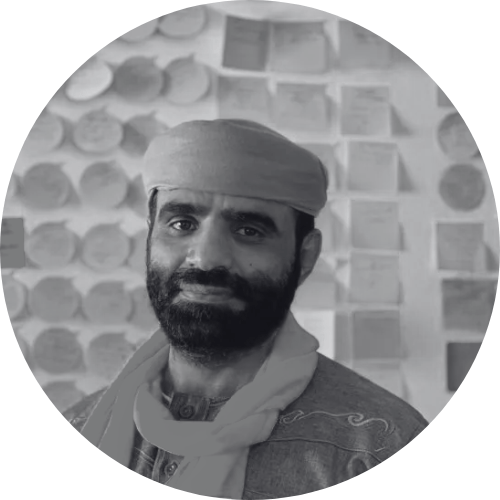
Mansoor Adayfi
Mansoor Adayfi is a writer, advocate, and former Guantánamo Bay prisoner. He spent nearly fifteen years without charge in U.S. custody, including eight years in solitary confinement. Originally from Yemen, he was released to Serbia in 2016. Since then, he has focused on continuing his education and on writing about his experiences. Adayfi’s writings have been published in The New York Times. These include “In Our Prison on the Sea” and “Taking Marriage Class at Guantánamo Bay.” He is also author of the essay “Did We Survive Torture?,” which is included in the edited volume Witnessing Torture; Perspectives of Torture Survivors and Human Rights Workers (2018). Hachette Books is the publisher of his 2021 memoir, Don’t Forget Us Here .
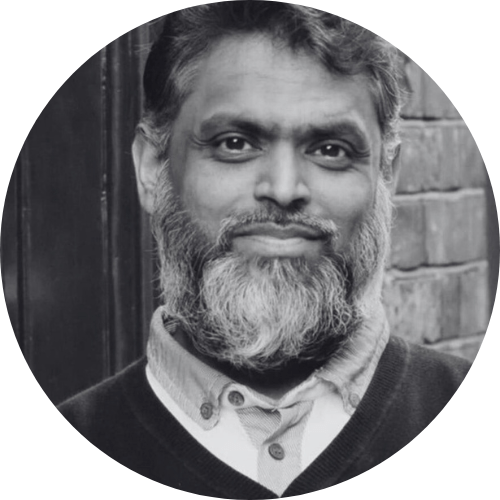
Moazzam Begg
Moazzam Begg is a British-born Muslim, he is a former Guantanamo Bay detainee and Outreach Director for CAGE. After his release, he became one of the most prominent public-speakers and Muslim advocates for justice and dialogue. He is the author of the best-seller Enemy Combatant in which he recounts his experience as an innocent man detained and tortured at Guantanamo, Bagram and Kandahar. The Muslim 500 listed him as one of the 500 “most influential Muslims” in the world. The New Statesman’s listed him in the top 50 “Heroes of our time”. He has travelled extensively to investigate state abuses and western complicity in torture including to Tunisia, Libya, and Syria. A direct eye-witness to the conflicts in Bosnia, Afghanistan and Syria, his life has been recorded by the Columbia University Oral History Project, and the BBC Storyville documentary The Confession.
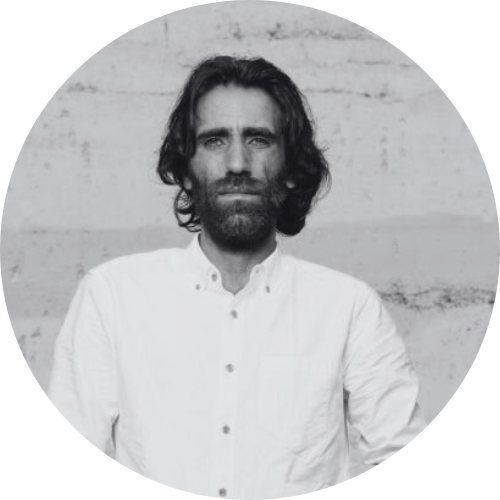
Behrouz Boochani
Behrouz Boochani is an award-winning Kurdish-Iranian writer, journalist, scholar, cultural advocate and filmmaker. He currently serves as an Associate Professor in Social Sciences at UNSW and is a non-resident Visiting Scholar at the Sydney Asia Pacific Migration Centre (SAPMiC) at the University of Sydney. Boochani is an Honorary Member of PEN International and has received numerous awards for his contributions to journalism, including the Amnesty International Australia 2017 Media Award, the Diaspora Symposium Social Justice Award, and the Anna Politkovskaya award. His memoir No Friend But the Mountains (Pan Macmillan 2018, trans. Omid Tofighian) was written during his seven years of incarceration by the Australian government in Papua New Guinea’s Manus Island prison. His new book, Freedom, Only Freedom, was published by Bloomsbury in November 2022.
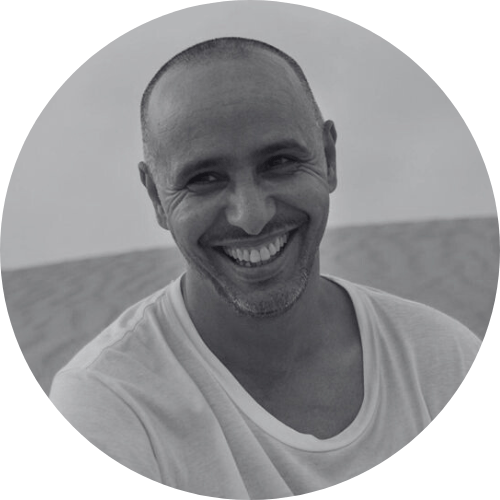
Mohamedou Ould Slahi-Houbeini
Mohamedou Houbeini is a writer, advocate, and former prisoner from Mauritania. He was detained at the U.S. government’s Guantánamo Bay prison without charge for approximately fourteen years. Houbeini wrote a memoir during his incarceration, which the U.S. government declassified in 2012 with numerous redactions. An international bestseller and the first memoir to be published during the author’s detention at the Guantánamo Bay naval base, was published as Guantánamo Diary in January 2015. The memoir was used as the basis for a film starring Tahar Rahim, Benedict Cumberbatch, and Jodie Foster. Titled The Mauritanian, it was released in February 2021. Slahi wrote four other books in detention, one of which he describes as being “about finding happiness in a hopeless place.” In 2021, his novel The Actual True Story of Ahmed & Zarga was published by Ohio University Press in its Modern African Writers series. At the time of this writing, Houbeini is a writer-in-residence at Noord Nederlands Toneel, a Dutch theatre company. His main publications have been published under the name Mohamedou Ould Slahi.
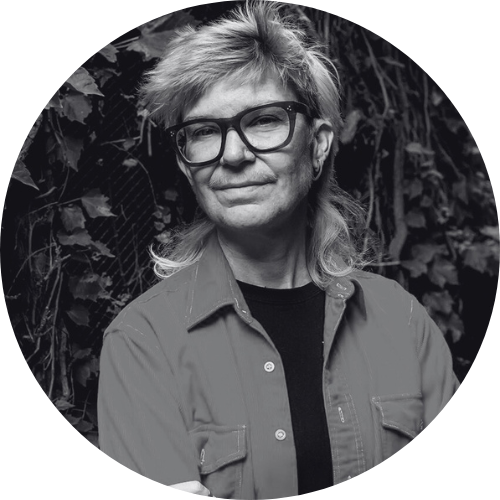
Erica Meiners
Writer, educator and organizer, Erica R. Meiners’ current books include For the Children? Protecting Innocence in a Carceral State (University of Minnesota 2016), a co-edited anthology The Long Term: Resisting Life Sentences, Working Towards Freedom (Haymarket Press 2018); the co-authored Feminist and the Sex Offender: Confronting Sexual Harm, Ending State Violence (Verso 2020); and the co-authored Abolition. Feminism. Now. (Haymarket 2022). Meiners collaboratively started and works alongside others in a range of ongoing mobilizations for liberation, particularly movements that involve access to free public education for all, including people during and after incarceration, and other queer abolitionist struggles. A member of Critical Resistance, the Illinois Death in Custody Project, the Prison+Neighborhood Arts / Education Project, and the Education for Liberation Network, Erica is a sci-fi fan, an avid runner, and a lover of bees and cats.
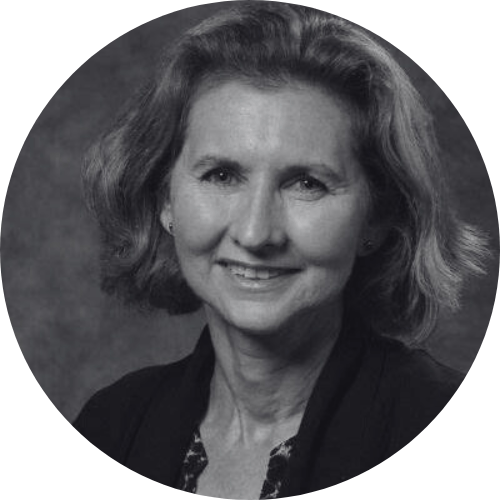
Alexandra S. Moore
Alexandra S. Moore is Professor of English and Director of the Human Rights Institute and Kaschak Institute for Social Justice for Women and Girls at Binghamton University. Her most recent publications include the monograph, Vulnerability and Security in Human Rights Literature and Visual Culture (2015) and several edited collections, including Writing Beyond the State: Post-Sovereign Approaches to Human Rights to Literature and Culture (with Samantha Pinto, 2020), Witnessing Torture: Perspectives of Survivors and Human Rights Workers (with Elizabeth Swanson, 2018), and The Routledge Companion to Literature and Human Rights (with Sophia A. McClennen, 2015). She publishes widely on representations of human rights violations in contemporary literature and film. Her current research is on the cultural afterlives of the rendition, detention, and interrogation program in the war on terror.
Abdellatif Nasser
Abdellatif Nasser was born and raised in Casablanca City, Morocco. After graduating from high school in mathematical science, he studied at the University of Science. For nearly twenty years, between 2002 and 2021, he was detained at the U.S. detention facilities at Guantanamo Bay, Cuba. He was never charged with a crime or tried, but like many others, he was repeatedly interrogated, tortured, and force-fed. He turned to hunger strikes because they were the only means by which he could resist soldiers’ harassment and arbitrary detention. He emerged as a block leader and for years pushed for educational opportunities for his fellow detainees. This led to his nickname, “the Minister of Education.” His story was widely covered in the New York Times, the Guardian, and in the 6-part NPR series “The Other Latif.” As noted in some of these reports, during his incarceration he created a handwritten bilingual (Arabic-English) dictionary that consisted of about 2,000 entries. In the two and a half years since his release, he has studied independently and completed different online courses in a variety of subjects.

María José Rubin
María José Rubin is an editor and doctoral candidate in Literature at the University of Buenos Aires. For over ten years she has worked as an educator at the Prison Extension Program—Programa de Extensión en Cárceles, School of Philosophy and Letters, University of Buenos Aires, in Argentina. As part of this program, she coordinates the Editing Collective Workshop, a course that produces several publications dedicated to circulate the writing of incarcerated students. She is a member of the Prison Writing National Meeting organization committee and develops academic research on prison writing, publication, and education. She has published papers on these topics, and is co-author of Escribir en la cárcel. Prácticas y experiencias de lectura y escritura en contextos de encierro, a book on reading and writing practices in prison. As part of the Prison Extension Program activities, she works at a project called “La Segunda,” which provides educational guidance to students who were formerly incarcerated.
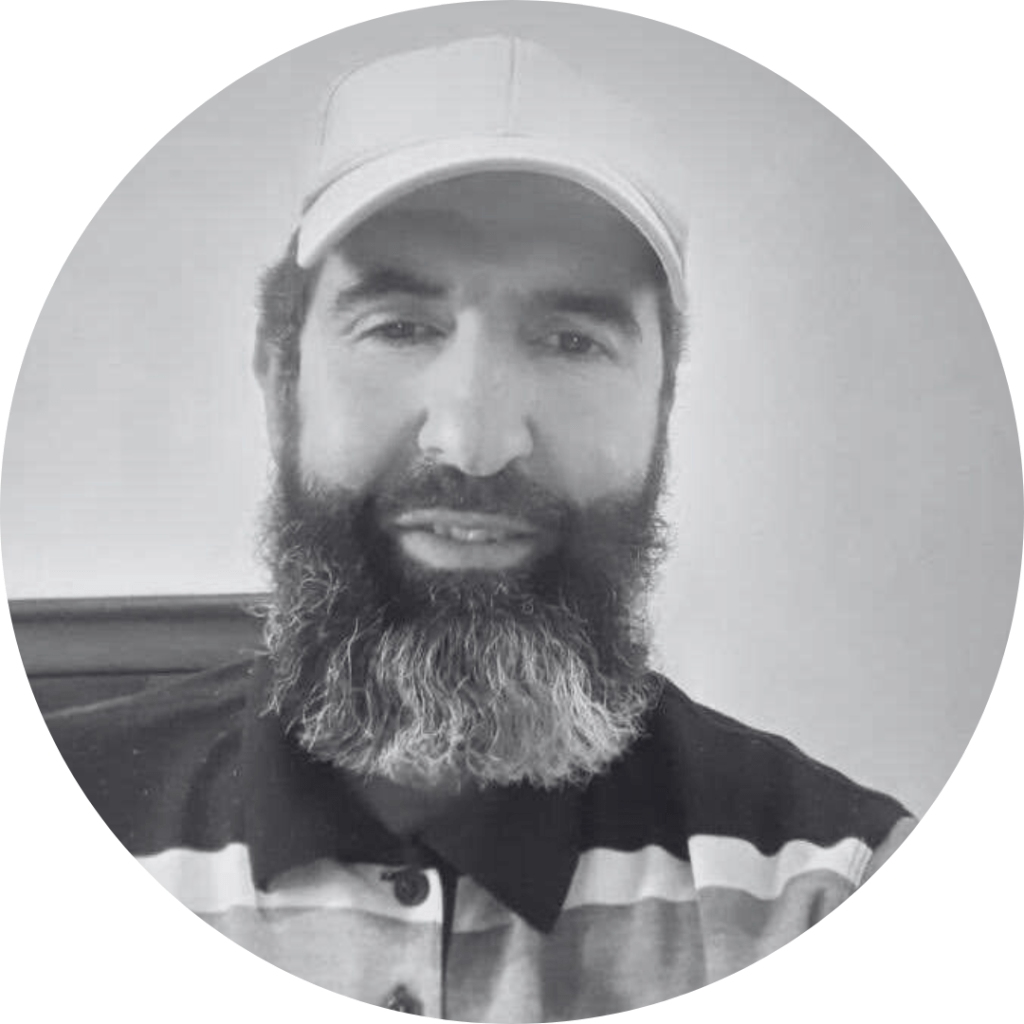
Barhoumi Sufyian
Barhoumi Sufyian is from Algeria. He was held in extrajudicial detention at the US naval base in Guantánamo Bay, Cuba for almost twenty years. There he earned a reputation for his good humor, his empathy for those who suffered, and the strong command of English that he acquired during his incarceration. His repatriation from Guantánamo Bay was arranged during the Obama administration but then delayed for about five years. He was reunited with his family in 2022 and is working hard to rebuild his life; he is committed to living a life based on honesty, kindness, and forgiveness. However, the stigma associated with his incarceration is difficult to overcome, and his subjection to various forms of suffering that were induced by his incarceration at Guantánamo is ongoing.
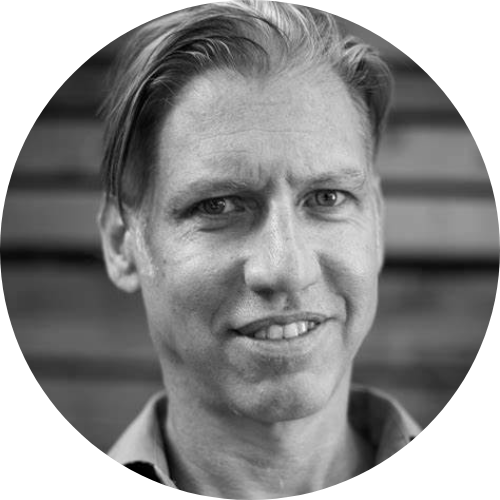
Elliott Young
Elliott Young is Professor in the History Department at Lewis and Clark College. Professor Young is the author of Forever Prisoners: How the United States Made the World’s Largest Immigrant Detention System, Alien Nation: Chinese Migration in the Americas from the Coolie Era through WWII, and Catarino Garza’s Revolution on the Texas-Mexico Border, as well as co-editor of Continental Crossroads: Remapping US-Mexico Borderlands History. He is co-founder of the Tepoztlán Institute for Transnational History of the Americas, the Migration Scholar Collaborative (MiSC) and the Migration and Asylum Lab (MAL) at Stanford University. He has also provided expert witness testimony for over 600 asylum cases.
Get in touch
Center for Inter- American Studies
Elisabethstraße 59/II
8010 Graz
 Camps, Carceral Imaginaries, and Critical Interventions