
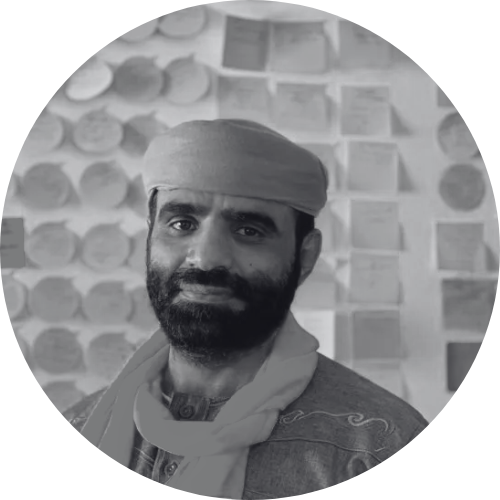
Mansoor Adayfi
Mansoor Adayfi is a writer, advocate, and former Guantánamo Bay prisoner. He spent nearly fifteen years without charge in U.S. custody, including eight years in solitary confinement. Originally from Yemen, he was released to Serbia in 2016. Since then, he has focused on continuing his education and on writing about his experiences. Adayfi’s writings have been published in The New York Times. These include “In Our Prison on the Sea” and “Taking Marriage Class at Guantánamo Bay.” He is also author of the essay “Did We Survive Torture?,” which is included in the edited volume Witnessing Torture; Perspectives of Torture Survivors and Human Rights Workers (2018). Hachette Books is the publisher of his 2021 memoir, Don’t Forget Us Here .

Sami Al-Haj
Sami Al-Haj holds a master’s degree in Business Administration and a Bachelor’s of Arts in Political Science from Poona University, India, where he studied from 1989 to 1992. He joined Al Jazeera Media Network in October 2000 as a journalist and is now the Director of its Center for Public Liberties and Human Rights. Under his stewardship, the Center has become a prominent advocate for press freedom, human rights monitoring, and the promotion of civil liberties worldwide. Al-Haj’s knowledge has been shaped by an ordeal that inflected debates about human rights and the rule of law at the global level—spending seven years detained without charge at the U.S. naval base at Guantánamo Bay, Cuba. He was finally released in 2008. That same year, he received a Special Award from the Association for International Broadcasting and International News Safety Institute, and in 2009 the Fondazione Festival Pucciniano: named him International Reporter of the Year. His experience of incarceration and the events leading up to it have made him a compelling symbol of the perils facing journalists in the post 9/11 era.
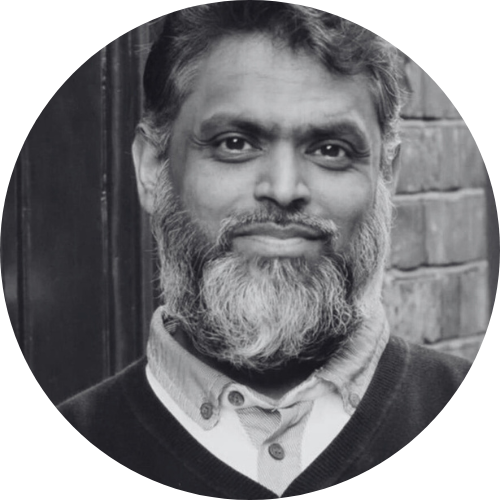
Moazzam Begg
Moazzam Begg, a British-born Muslim, is a former Guantánamo Bay detainee and Outreach Director for CAGE. After his release, he became one of the most prominent public-speakers and Muslim advocates for justice and dialogue. He is the author of the best-seller Enemy Combatant, a memoir in which he recounts his experience as an innocent man detained and tortured at Guantánamo, Bagram and Kandahar. He has travelled extensively to investigate state abuses and western complicity in torture including to Tunisia, Libya, and Syria. The Muslim 500 listed him as one of the 500 “most influential Muslims” in the world, and The New Statesman’s listed him in the top 50 “Heroes of our time”. A direct eye-witness to the conflicts in Bosnia, Afghanistan and Syria, his life has been recorded by the Columbia University Oral History Project, and the BBC Storyville documentary “The Confession.” In 2025, he was arrested for opposing genocide in London’s Parliament Square.
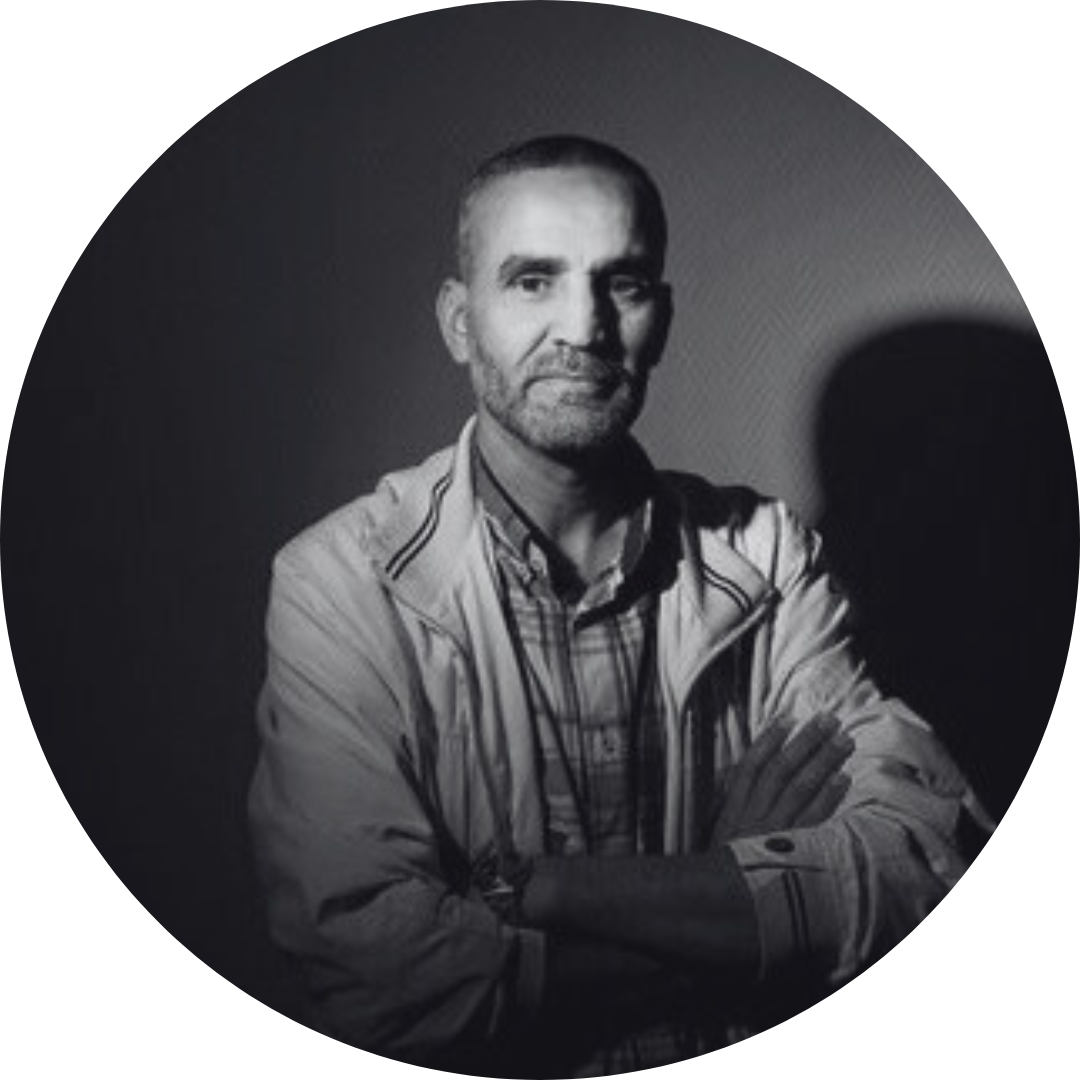
Lakhdar Boumediene
Lakhdar Boumediene was born and raised in Algeria, and as an adult he worked for various humanitarian causes. Boumediene was imprisoned at the U.S. naval base at Guantánamo Bay from January 2002 to May 15, 2009. Like others, he was detained and interrogated, but not charged. He was also the lead plaintiff in Boumediene v. Bush (2008), a U.S. Supreme Court case that he won. The court determined that Guantánamo detainees and other foreign nationals have the right to file writs of habeas corpus in U.S. federal courts. Boumediene and Mustafa Ait Idir are the authors of Witnesses of the Unseen: Seven Years in Guantanamo (2017).
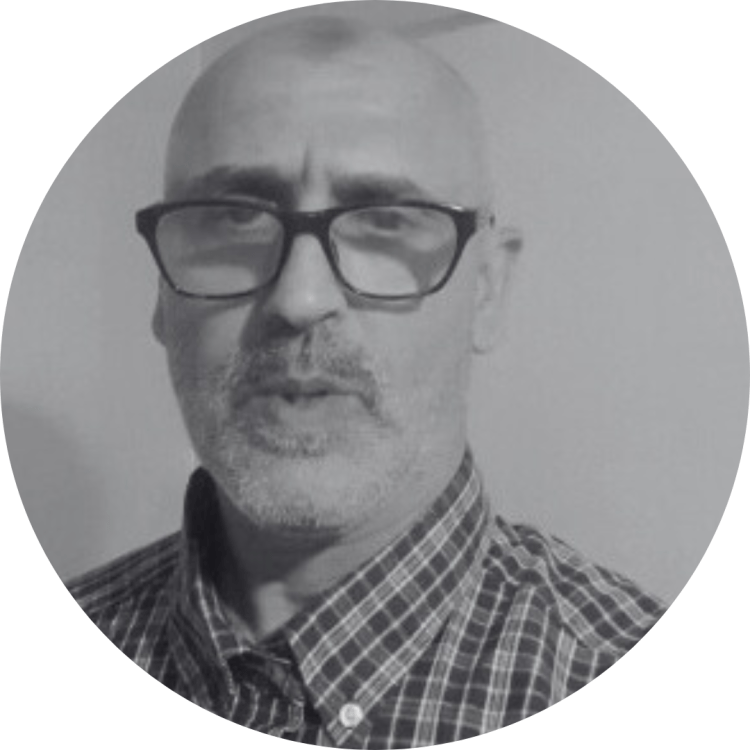
Abdellatif Nasser
Abdellatif Nasser was born and raised in Casablanca City, Morocco. After graduating from high school in mathematical science, he studied at the University of Science. For nearly twenty years, between 2002 and 2021, he was detained at the U.S. detention facilities at Guantanamo Bay, Cuba. He was never charged with a crime or tried, but like many others, he was repeatedly interrogated, tortured, and force-fed. He turned to hunger strikes because they were the only means by which he could resist soldiers’ harassment and arbitrary detention. He emerged as a block leader and for years pushed for educational opportunities for his fellow detainees. This led to his nickname, “the Minister of Education.” His story was widely covered in the New York Times, the Guardian, and in the 6-part NPR series “The Other Latif.” As noted in some of these reports, during his incarceration he created a handwritten bilingual (Arabic-English) dictionary that consisted of about 2,000 entries. In the two and a half years since his release, he has studied independently and completed different online courses in a variety of subjects.
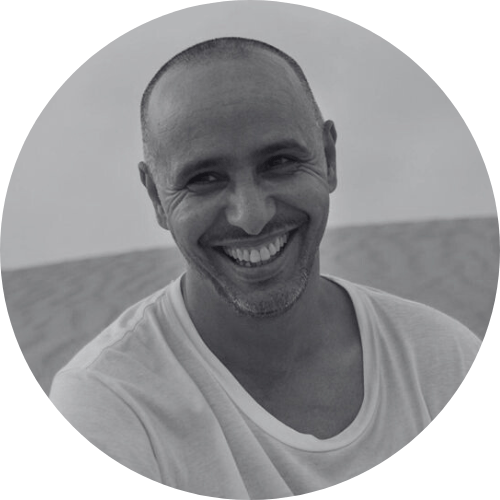
Mohamedou Ould Salahi-Houbeini
Mohamedou Ould Salahi Houbeini is a writer, advocate, and former prisoner from Mauritania. He was detained at the U.S. government’s Guantánamo Bay prison without charge for approximately fourteen years. Houbeini wrote a memoir during his incarceration, which the U.S. government declassified in 2012 with numerous redactions. An international bestseller and the first memoir to be published while the author was still detained in the naval base, it was released as Guantánamo Diary in January 2015. In 2017, a “restored edition” was published with thousands of redactions removed and new life added. The memoir was used as the basis for “The Mauritanian,” a 2021 film starring Tahar Rahim, Benedict Cumberbatch, and Jodie Foster. Slahi wrote four other books in detention, one of which he describes as being “about finding happiness in a hopeless place.” In 2021, his novel The Actual True Story of Ahmed & Zarga was published by Ohio University Press in its Modern African Writers series. At the time of this writing, he is writer-in-residence at Noord Nederlands Toneel, a Dutch theatre company.

Barhoumi Sufyian
Barhoumi Sufyian is from Algeria. He was held in extrajudicial detention at the US naval base in Guantánamo Bay, Cuba for almost twenty years. There he earned a reputation for his good humor, his empathy for those who suffered, and the strong command of English that he acquired during his incarceration. His repatriation from Guantánamo Bay was arranged during the Obama administration but then delayed for about five years. He was reunited with his family in 2022 and is working hard to rebuild his life; he is committed to living a life based on honesty, kindness, and forgiveness. However, the stigma associated with his incarceration is difficult to overcome, and his subjection to various forms of suffering that were induced by his incarceration at Guantánamo is ongoing.
Get in touch
Center for Inter- American Studies
Schubertstraße 21, Ground Floor
8010 Graz
 Camps, Carceral Imaginaries, and Critical Interventions