

A Taxi and a New Beginning for Sufiyan
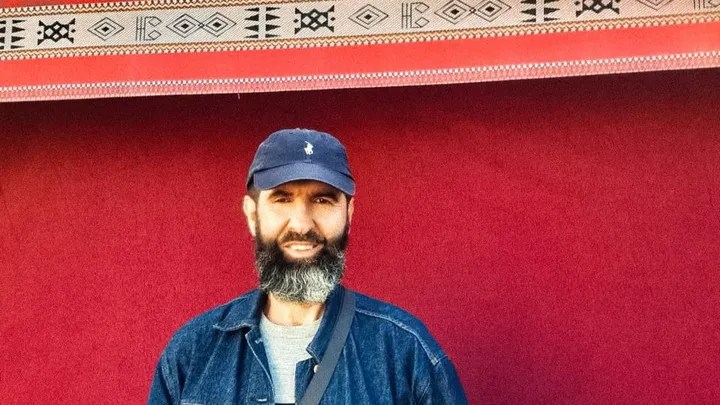
Sufiyan Barhoumi lives in Algeria and has been searching for a job for almost two years following his release from Guantánamo Bay prison in 2022, where he was held for almost 20 years without charge. No one will hire him because of the stigma associated with being a former Guantánamo Bay prisoner.
Now a group of friends and supporters have come together to raise funds that will be used to buy a late model car. This will allow him to become an independent taxi driver. Having his own car and working for a car service will enable him to generate an income on his own and thereby cover expenses such as rent and groceries, and to begin to rebuild his life.
Sufiyan was imprisoned at Guantánamo in June 2002, along with hundreds of other men. He was stripped of his identity and labeled prisoner 694. All charges against Sufiyan were dropped by 2008. However, he continued to be held year after year, even after the US military’s Periodic Review Board officially cleared him for release in August 2016 . He languished in the facility, enduring psychological and physical torment for a total of almost 2 decades. He was finally released in 2022.
The assistance he has received since 2022 has been minimal. The US government has not provided him with any sort of compensation or funding to assist in readjusting to civilian life, even though he was held for many years without charge and subjected to abuse while incarcerated. Sufiyan is now near his family, but they do not have the economic means necessary to buy him a car or cover his basic expenses.
The car purchased will be a used vehicle, probably a late-model Toyota, with an automatic transmission. The latter feature is important because Sufiyan suffered an injury that limits the use of one of his hands. The car will be purchased, insured, and registered using the funds collected through this initiative.
Please consider contributing to this project. No donation is too small. This taxi will be a foundation that allows Sufiyan to rebuild his life.
For additional details about Sufiyan’s case, visit the Center for Constitutional Rights:
Sufiyan Barhoumi
THANK YOU.
Presentation of New Publications
Sargasso: Camps, (In)Justice & Solidarity
Caribbean Studies Vol. 51, No. 2
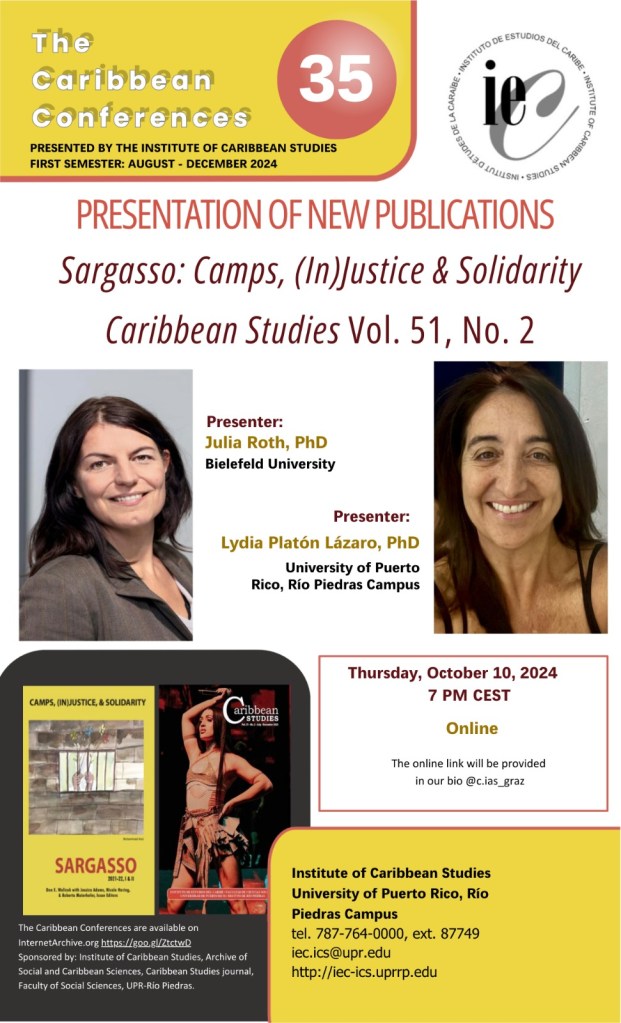
We are Following the two Graz/Puerto Rico International Conferences on Human Rights we are excited to announce an online follow-up event on Thursday, October 10, at 7 p.m. ✨
Sargasso’s most recent volume, Camps, (In)Justice & Solidarity, will be discussed in a hybrid event broadcast on Zoom.
The volume Camps, (In) Justice & Solidarity will be discussed alongside the most recent volume of the journal Caribbean Studies in an event sponsored by the Institute of Caribbean Studies at the University of Puerto Rico’s Río Piedras Campus.
Two scholars will review the volumes:
Professor Julia Roth of Bielefeld Univeristy will comment on the Sargasso volume and Professor Lydia (“Puchi”) Platón of the University of Puerto Rico will comment on the Caribbean Studies volume.
This event seeks to promote the volume that includes your work and to cultivate awareness the CAMPS conferences that took place in 2022 and 2024. It will be followed up with online promotional materials on materials on the blog Repeating Islands, the UPR website, as well as on Sargasso’s Facebook page and its new Instagram profile, among other spaces.
Click here for the zoom link!
OUT NOW – The Camps Conference Report 2024

We are excited to share our report for the CAMPS Conference 2024!
A big thank you goes to all the participants and organizers who made this conference possible. For the report, we collected all the events, talks, participants, and photos of the conference and merged then together into a little booklet.
Click here to view the report!
Special Local Panel

Local Panel on Confined Spaces During and After the War: Historical perspectives on examples of camp structures in Austria 1939 to 1955
On the territory of todays Austria, many different forms of camps as confined spaces existed during the 20th century. They were set up and used by different state and non-state actors, had different purposes and accommodated, often also isolated and interned different groups and parts of society. Such structures were usually characterized by a small, confined space controlled by an outside power, immates that shared at least one common characteristic and had certain ways in and out, defined by the acting power. Many of them also had a development history that spans across more than one political system, making camps also, to a certain degree, to a continuity in infrastructure and historical memory on a local level. It can be stated that Austria was during the 20th century for a long time also a “land of camps”. This panel wants to give an insight into examples of camp types on the territory of todays Austria during and after World War II that have not been subject to in-depth research yet. Based on recent research projects conducted at the Ludwig Boltzmann Institute for Research on Consequences of War in Graz, the three presentations of the panel will focus on camps for forced laborers in the city of Graz and camps in the Soviet zone of occupation in post-war Austria. The presentation of Martin Sauerbrey-Almasy will show aspects of his recent research on civilian forced laborers in Graz and their accommodation and living conditions, and what role camp structures played here. Dieter Bacher will provide a give insights into a “work in progress”, a research project on camps in the Soviet zone of occupation after 1945 that started in 2022 and will present some first results of it. And Katharina Bergmann-Pfleger focus on the role camp studies can play in connection with local memory and heritage and will present concepts for dissemination of camp studies. Common topics will be localization and documentation of camp structures, types and defining aspects of camps and documentations and possible approaches for historical research. With this, the presentations will try to give answers to the question to what extend Austria has a “historical heritage of camps”.
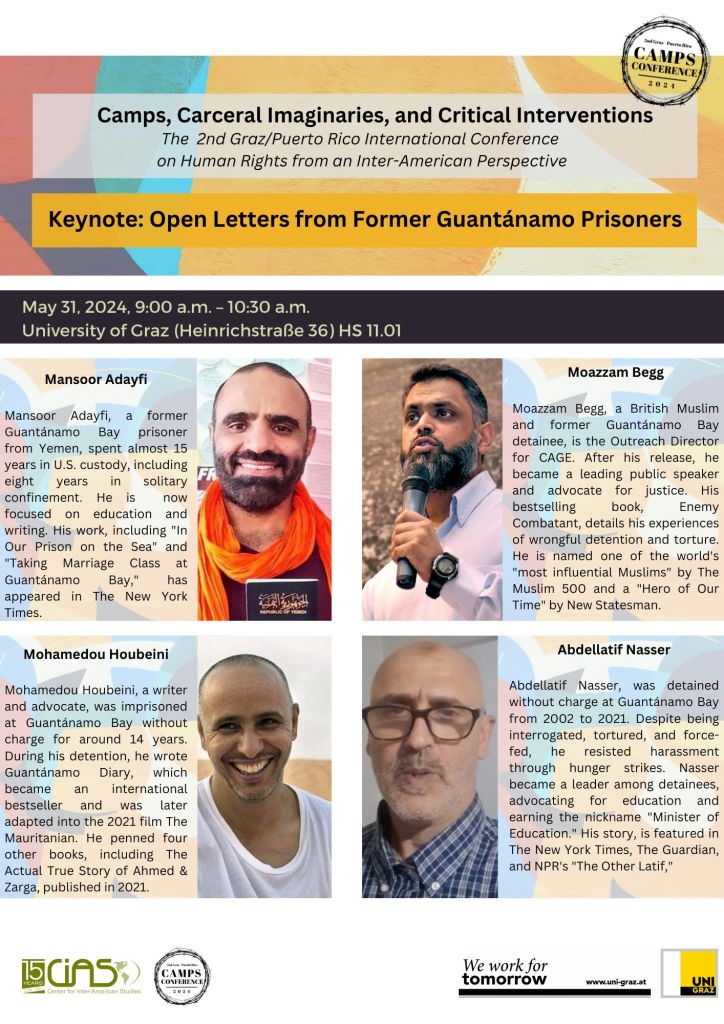
Special Panel: Open Letters from Former Guantánamo Prisoners
This panel will begin with the presentation of open letters or testimonies by four former Guantánamo prisoners from a variety of different backgrounds. Their presentations will be complemented by horizontal dialogue and followed by a question and answer session with the audience.
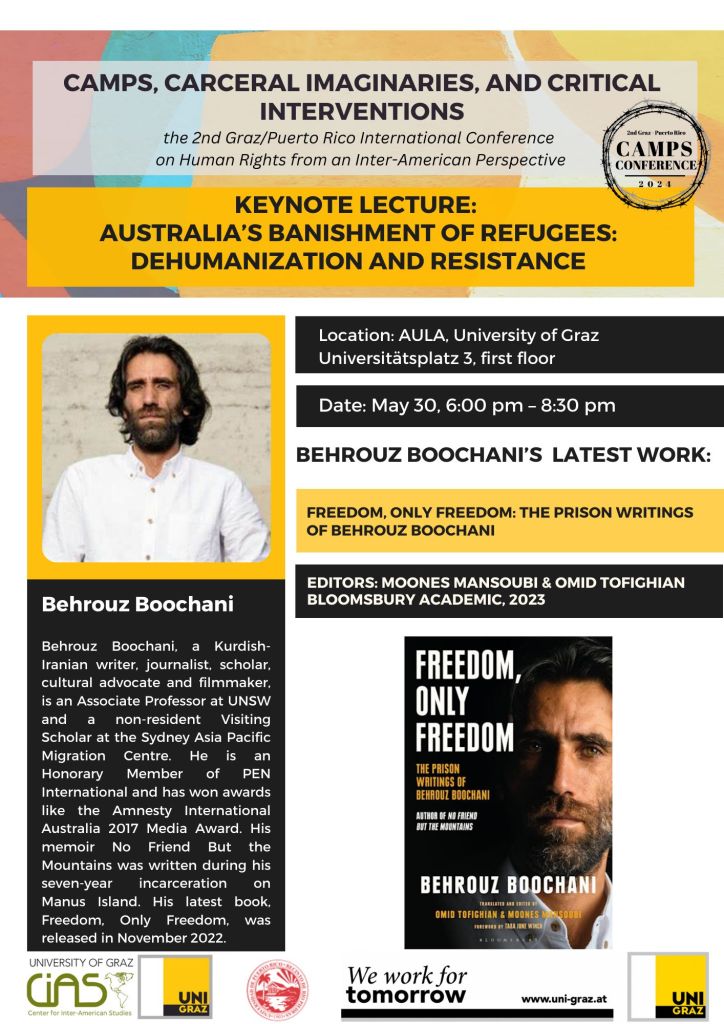
Keynote Lecture: Australia’s Banishment of Refugees: Dehumanization and Resistance
The government of Australia has banished refugees to Papua New Guinea’s Manus Island and Nauru, an island country in the southwestern Pacific Ocean, establishing prison camps designed to dehumanize detainees in both of these sites. This presentation will discuss the operation of this offshore detention system, some of my experiences as a prisoner detainee at Manus Island, and how I and others held there have resisted it. The impact that the policies and practices associated with indefinite detention have had on political culture and Australia’s role as a model for other countries, including the United Kingdom, will also be discussed.

Keynote Lecture: A Queer Struggle: Abolition Feminism Against Empire
Gender and sexual harm – particularly targeting women and children – continues to be a globally reliable pretext for the expansion and consolidation of empire and carcerality. Targeted for punishment, and often elimination, queer communities are at the forefront of both exposing these fictions of “state protection” and imagining and building other forms of material safety outside of policing and imprisonment. This talk flags the imperative of challenging the persistence of carceral feminism and also amplifies grassroots and global practices of abolition feminism.
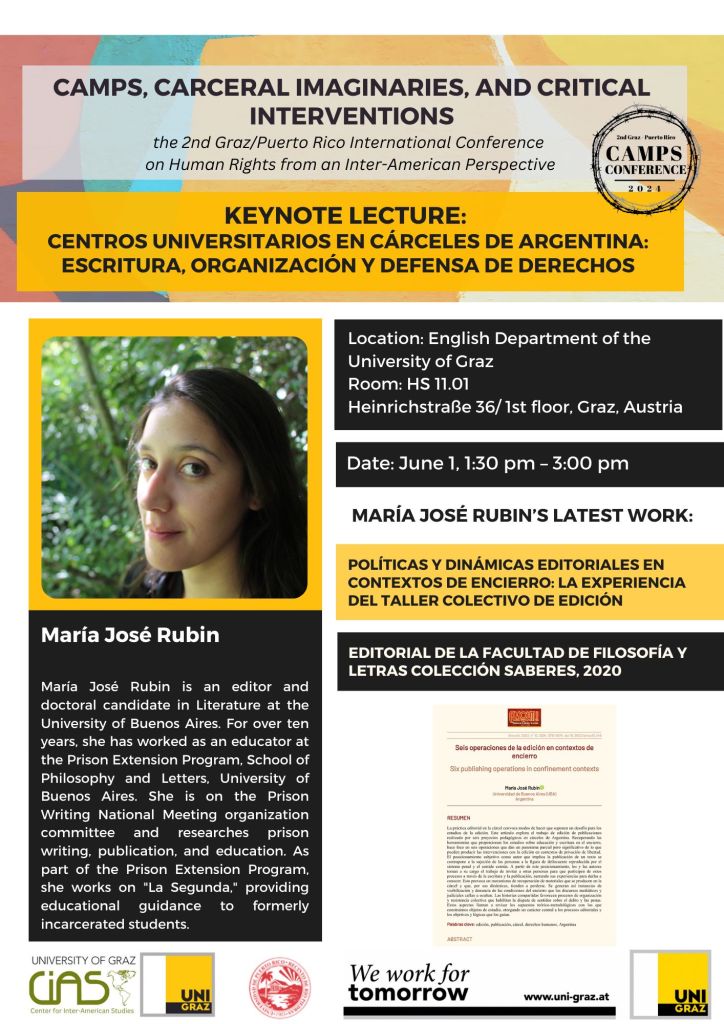
Keynote Lecture: Centros Universitarios en Cárceles de Argentina: Ecritura, Organización y Defensa de Derechos
Esta presentación abreva de mi experiencia como integrante del Programa de Extensión en Cárceles de la Facultad de Filosofía y Letras de la Universidad de Buenos Aires, que dicta y coordina talleres extracurriculares y actividades académicas en centros universitarios en cárceles de Argentina. Quienes integramos el programa trabajamos para la defensa del acceso a derechos y consideramos que la educación puede habilitar condiciones para la construcción de espacios según lógicas diferentes de las que impone la institución penal. Nuestros talleres hacen foco en la escritura y la publicación como instancias de aprendizaje y creación colectiva. Mediante dinámicas horizontales de trabajo, buscamos favorecer la autonomía de los y las participantes, que son autores y autoras de los textos publicados, tanto como editores y editoras de las publicaciones en las que los reproducimos. Mediante la lectura de sus páginas, propongo explorar la práctica pedagógica y la vida universitaria en contextos de encierro convocando las voces de sus estudiantes.
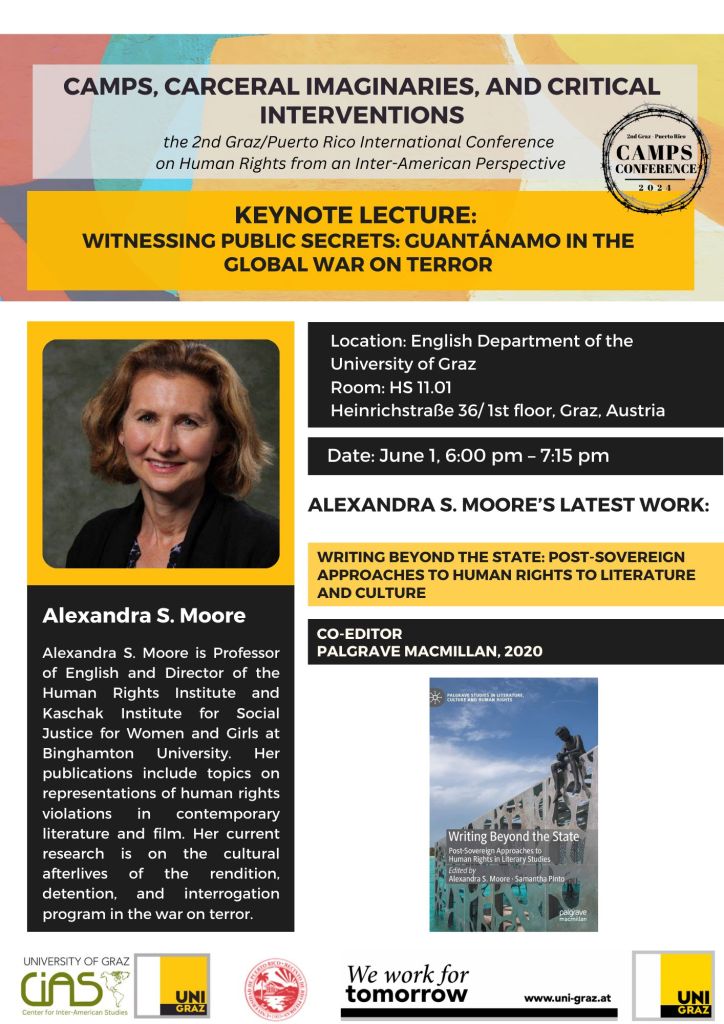
Keynote Lecture: Witnessing Public Secrets: Guantánamo in the Global War on Terror
In seeking to avoid legal accountability and to control the narrative of Guantánamo’s ongoing role in the “war on terror,” the U.S. government and its representatives have turned frequently to the language of secrecy and state privilege and their attendant devices such as censorship, redaction, and euphemism. This paper first examines theories of public secrets, of “knowing what not to know,” for
their window into the operations of state power. The paper then turns to forms of witnessing and cultural representation that do not so much disclose secrets as dismantle the structure of the public secret itself.
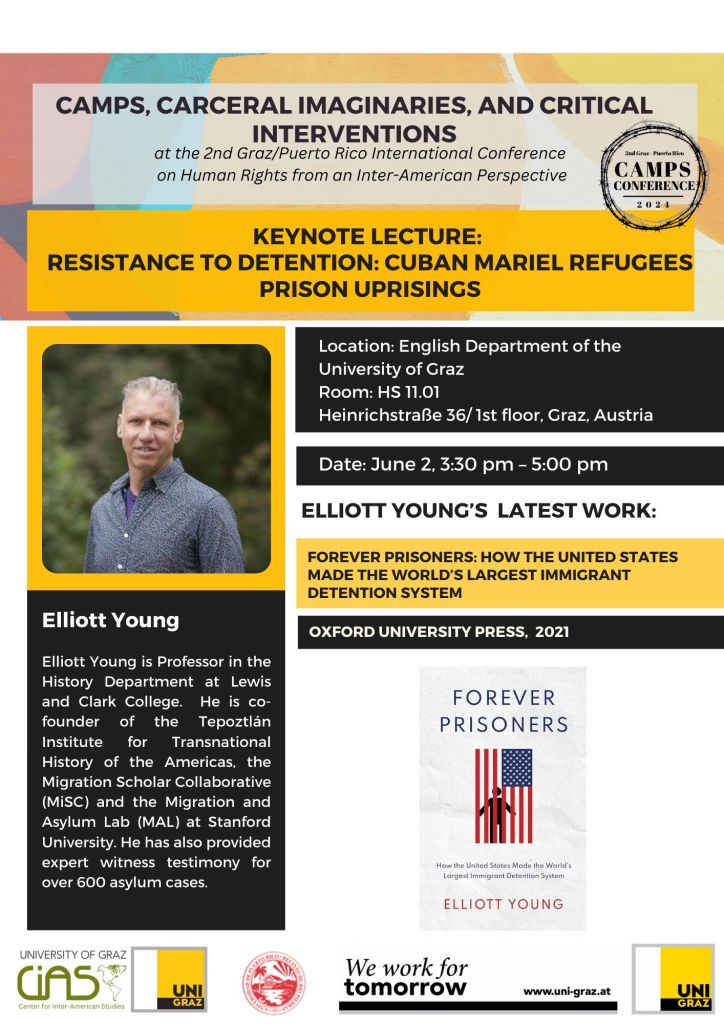
Keynote Lecture: Resistance to Detention: Cuban Mariel Refugees Prison Uprisings
In 1987, more than 2400 Cuban refugees in indefinite detention in the Atlanta Penitentiary and an Oakdale, Louisiana detention center, seized the prisons, and demanded individual reviews of their cases and a moratorium on being deported to Cuba. These Cubans had arrived to the United States in 1980 as part of the Mariel Boatlift, and while in the United States, they had committed crimes. After serving their sentences, they were ordered deported to Cuba, but given the breakdown in relations between the two countries, they could not be sent there. Instead, they languished in indefinite detention for years with no possibility of ever gaining release. When news spread in November 1987 that they would be returned to Cuba, the detainees seized the prison facilities along with more than 100 hostages. The prison takeovers were just one dramatic moment in a longer history of Cuban detainee resistance to unjust incarceration, including lengthy hunger strikes and peaceful protests within prison walls. What can we learn from these prison uprisings and other forms of protest about the possibility and limitation of detainee organizing and resistance?
 Camps, Carceral Imaginaries, and Critical Interventions