Academic Board

Don E. Walicek
Don E. Walicek is Professor of English and Linguistics at the University of Puerto Rico’s Río Piedras Campus, where he currently serves as Director of the Institute of Caribbean Studies. He earned a BA in Cultural Anthropology and an MA in Latin American Studies at the University of Texas at Austin. He holds an MFA in poetry from New York University’s Writers Workshop in Paris and was awarded his PhD in English from the University of Puerto Rico. His publications include Guantánamo and American Empire: The Humanities Respond (2018) and an issue of the Caribbean Studies journal Sargasso titled,“Guantánamo: What’s Next?,”both of which he co-edited with Jessica Adams. In 2019, he was a Fulbright Scholar at the Karl-Franzens University of Graz and a Fellow of the American Council of Learned Societies. In 2023, he offered the Annual Emancipation Lecture in the Valley, Anguilla.

Nicole Haring
Nicole Haring is (Senior) Scientist in American Studies and Director of the Center for Inter-American Studies and Co-Director of the Graz School of Interdisciplinary Transnational Studies at the University of Graz, Austria. Her research interests focus on feminist theories, contemporary US-American literature, and Inter-American studies. Currently, she works on carcerality, abolitionist theory, and intersectional environmentalism. She co-edited the Special Issue of the Sargasso Journal “Camps, (In)Justices and Solidarity in the Americas” (with D. Walicek, J. Adams, R. Maierhofer, 2024) and is currently co-editor of the volume Reconfiguring Carceral Imaginaries: Across Camps, Prisons, and Borders (with D. Walicek, Palgrave, forthcoming 2026).
International Advisory Committee

Bilgin Ayata
Bilgin Ayata is Professor of Migration and Transnational Studies at the Graz School of Interdisciplinary Transnational Studies, University of Graz. Her research and teaching focus on migration, borders, postcolonial studies, and affective politics. In 2022, she received a NOMIS research award for her interdisciplinary and comparative study “Elastic Borders”, which develops an empirically grounded new theory of contemporary borders. Ayata is co-speaker of the Cluster „Migration, Mobility and Borders in Europe and Beyond“ within the Field of Excellence „Dimensions of Europe“ at the University of Graz. Her previous research projects, funded by the German Science Fund (DFG), Swiss National Science Foundation (SNSF) and the Swiss Network for International Studies (SNIS), investigated Affective Citizenship and Infrastructure Space and the Future of Migration Management. Ayata has published widely on migration, diasporas, transnationalism, affective politics, and citizenship. From 2019 to 2023, she served as DFG-Mercator Fellow at the Collaborative Research Center „Affective Societies“ at Freie Universität Berlin. Beyond academia, she regularly collaborates with artists and cultural institutions to foster cross-fertilization between science and the arts, including with the Kunstmuseum Basel, Maxim Gorki Theater Berlin, Werkstatt der Kulturen Berlin and Kunsthaus Graz.

Roberta Maierhofer
Roberta Maierhofer is Professor of American Studies at the University of Graz, Austria. From 1999 to 2011, she held a series of Vice-Rector positions for International Relations (1999-2003), International Relations and Affirmative Action for Women (2003-2007), and International Relations and Interdisciplinary Cooperation (2007-2011). She previously served as the director for the Cenetr for Inter-American Studies (CIAS) (2007-2025). In 2000, she initiated and established the focus area South-Eastern Europe at the University of Graz. This expertise of regional and interregional collaboration was fundamental for her leadership role at the Center for Inter-American Studies and determined how the University of Graz established a second regional focus area in terms of North-, Central- and South America in 2012. She also acts as a co-advisor in terms of the Joint Degree in English and American Studies. Since 2004, she has been directing the Graz International Summer School Seggau, which was established as an interdisciplinary and intercultural platform in the fields of European and Inter-American Studies.

Leila Rodríguez Soto
Leila Rodríguez Soto, Ph.D., is an associate professor in the Department of Sociology and Anthropology at the University of Puerto Rico, Río Piedras Campus. She is also the academic director of the journal Caribbean Studies, which is affiliated with the Institute of Caribbean Studies. She holds a master’s degree and a PhD in Anthropology and Demography from Pennsylvania State University. Additionally, she has a bachelor’s degree in Anthropology from the University of Costa Rica. Her current research focuses on the use of cultural expertise as a tool to improve access to justice, as well as international migrations in Central America and the Caribbean. She is the author of the book Culture as Judicial Evidence: Expert Testimony in Latin America (2021) and has published dozens of academic articles, including From Quantitative Fact to Discursive Practice: Techniques for Asserting the Reliability of Anthropological Knowledge in Expert Testimony (2022), Cultural Expert Testimony in American Legal Proceedings (2018), and Valorizando los Efectos de las Emigraciones y las Remesas: Una Comunidad Costarricense ante la (Re)estructuración de Jerarquías de Género y Clase (2016).

Julia Roth
Julia Roth is currently teaching American Studies at Bielefeld University, where she is also director of the Center for Interamerican Studies (CIAS) and PI at the DFG Graduate School “Experiencing Gender”. Previously, she was Professor of American Studies with a focus on Gender Studies and Inter-American Studies in Bielefeld and postdoctoral fellow in the research project “The Americas as Space of Entanglements” in Bielefeld and in the interdisciplinary network “desiguALdades.net – Interdependent Inequalities in Latin America” at Freie Universität Berlin. She was well as a lecturer at Humboldt-Universität Berlin, Universität Potsdam, and Universidad de Guadalajara, Mexico snd La Plata, Argentina. Her research focuses on postcolonial, decolonial and gender approaches, intersectionality and global inequalities, anti-racist feminist knowledge from the Caribbean and the Americas, Hip Hop and social transformation, gender and genre, law and literature and legal imaginaries, gender and citizenship, and right-wing populism and gender. In addition to her academic work, she co-/organizes and -curates cultural and political events.

Frithjof Nungesser
Frithjof Nungesser is a Senior Lecturer in the Department of Sociology at the University of Graz and a Visiting Researcher at the Hamburg Institute for Social Research. His main research interests include social theory, cultural and political sociology, the sociology of violence, and human-animal relations. Recent publications are: “Defying Guantánamo: Resistance to Indefinite Detention and Torture in a Prison Camp,” International Journal of Comparative Sociology 66(3)/2025; “Die plurale Aktualität der Folter: Plädoyer für eine entmythologisierende Forschungsperspektive,” Mittelweg 36 34(2), 2025; and “Verletzbarkeit und Gesellschaft: Soziologische Perspektiven auf Vulnerabilität,” Zeitschrift für Soziologie 54(1)/2025 (co-authored with Eddie Hartmann).

Maritza Stanchich
Maritza Stanchich, Ph.D., is Professor of English at University of Puerto Rico, Río Piedras, where she teaches Puerto Rican diaspora, Latinx, Caribbean and US American literatures at the BA, MA and doctoral levels. Her essays on Faulkner in a circum-Caribbean context, Puerto Rican diaspora literature, and the crisis in Puerto Rico have been published in peer-reviewed journals and books, including Sargasso, Mississippi Quarterly, Latino Studies, Cultural Dynamics, and Prospero’s Isles: The Presence of the Caribbean in the American Imaginary (2004), Writing Of(f) the Hyphen: New Critical Perspectives on the Literature of the Puerto Rican Diaspora (2008), Hispanic Caribbean Literature of Migration: Narratives of Displacement (2010), Acknowledged Legislator: Critical Essays on the Poetry of Martín Espada (2014), Essays on Tato Laviera: The AmeRícan Poet (2014), Poets, Philosophers, Lovers: On the Writings of Giannina Braschi (2020). An award-winning journalist, her columns for The Huffington Post, The New York Times and The Guardian helped bring international attention to Puerto Rico’s crisis, starting in 2010. She is the author of De huelga a pandemia en Puerto Rico: una década de intervenciones periodísticas internacionales (2024 Editora Educación Emergente), a collection of select, annotated articles translated by Zinnia M. Cintrón-Marrero. Her most recent poems have been published in Sargasso (2021-2022) and ZiN Daily (2024).

Esther Whitfield
Esther Whitfield is a scholar of contemporary Latin American and Caribbean literature. She received a B.A. in Modern Languages from Oxford University and a Ph. D. in Romance Languages & Literatures from Harvard University. She joined the faculty of Brown’s Department of Comparative Literature in 2002; as of 2012, she is jointly appointed in the Department of Hispanic Studies. Her publications include: A New No-Man’s-Land: Writing and Art at Guantánamo, Cuba (2024), The Black Arrow (a poetry collection by José Ramón Sánchez that she translated with Katerina Gonzalez Seligmann) (2023), and Havana Beyond the Ruins: Cultural Mappings of the City after 1989 (2011).
Organizational Committee
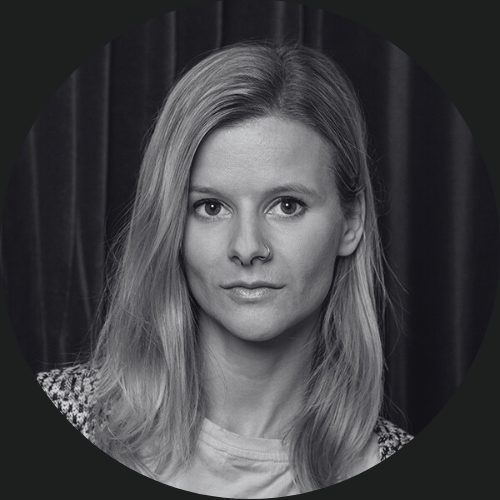
Christina Korak
Christina Korak is (Senior) Scientist and vice-president of the Austrian Association of Studies on Latin America (LAF). Since 2012, she has explored agents and power relations between resource extractivism and indigenous self-determination in the Ecuadorian and Peruvian Amazon region focusing on the use of indigenous languages and political questions of (non-) translation. In the project “Towards a Cosmovision Turn, together with Rafael Schögler, she questioned the historical relations between Translation Studies and the evangelical missionary organization Summer Institute of Linguistics which from 1958 contacted Ecuador’s Waorani people. In her current project “Remembering_Resistance. Women’s Translations of Territorial, Linguistic and Cultural Rights” (in collaboration with Adriana Caguana Rodríguez of the Andean Program for Human Rights, Universidad Andina Simón Bolívar) she works with a group of Waorani women making collective memory on practices and knowledges.

Eva Bauer
Eva Katharina Bauer is PhD candidate and research assistant at the Center for Inter-American Studies at the Graz School of Interdisciplinary Transnational Studies (University of Graz, Austria). She earned her Joint Master’s Degree in English and American Studies from the University of Graz (Austria) and the Université Paris Cité (France). Currently also active as the project coordinator for the Erasmus+ project “Eco-Stories” (www.ecostories.org), she is engaged in the intersection of language, culture, and environmental issues. Her academic interests mainly revolve around socio- and psycholinguistics as well as feminist and African American literature. Her ongoing research investigates the temporal aspects of environmental concerns in the Caribbean in the broader fields of ecolinguistics and environmental humanities.
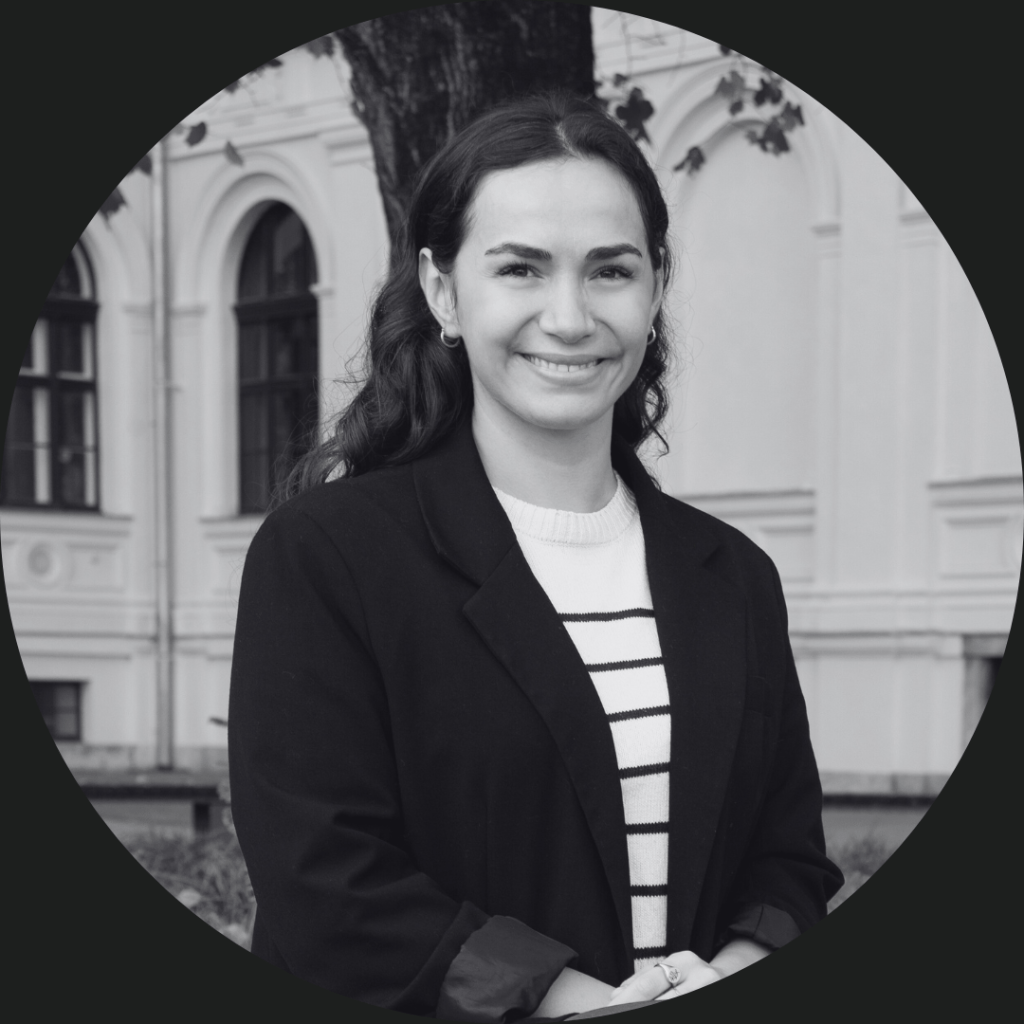
Artiola Kajtazi
Artiola Kajtazi is a MA student at the University of Graz, specializing in English and American studies. Alongside her academic commitments, Artiola serves as a student assistant at the Center for Inter-American Studies. She previously worked as ESL teacher and executive assistant. Beyond her academic and professional endeavors, she is a passionate human rights activist. Her commitment to this cause has led her to collaborate with various local and international non-governmental organizations operating in Kosovo, focusing on raising awareness and supporting women’s rights, including organizing impactful events to address the issue of rape victims from the 1999 war in Kosovo.

Maria Niedermayr
Maria Niedermayr is office manager and project assisstant at the Center for Inter-American Studies at the Graz School of Interdisciplinary Transnational Studies (University of Graz). They hold a Joint Master’s Degree in English and American studies from the University of Graz (Austria) and Ca’Foscari University (Italy) with a focus on film studies. Personal interests include but are not limited to visual media, in particular film and (narrative) video games, as well as questions and representations of gender and queerness.

Şeyma Yonar
Şeyma Yonar holds a Master’s degree in English and American Studies from the University of Graz, Austria, and she completed a mobility semester at the Autonomous University of Barcelona as part of the European Joint Master’s Programme. She is currently a project assistant for the Erasmus+ project Eco-Stories (www.ecostories.org), coordinated by the Center for Inter-American Studies at the University of Graz. Her research interests include North American and transnational literary studies, with a focus on Canadian short fiction, ecocriticism, and gender studies.
Get in touch
Center for Inter- American Studies
Schubertstasse 21/ Ground Floor
8010 Graz
 Camps, Carceral Imaginaries, and Critical Interventions